
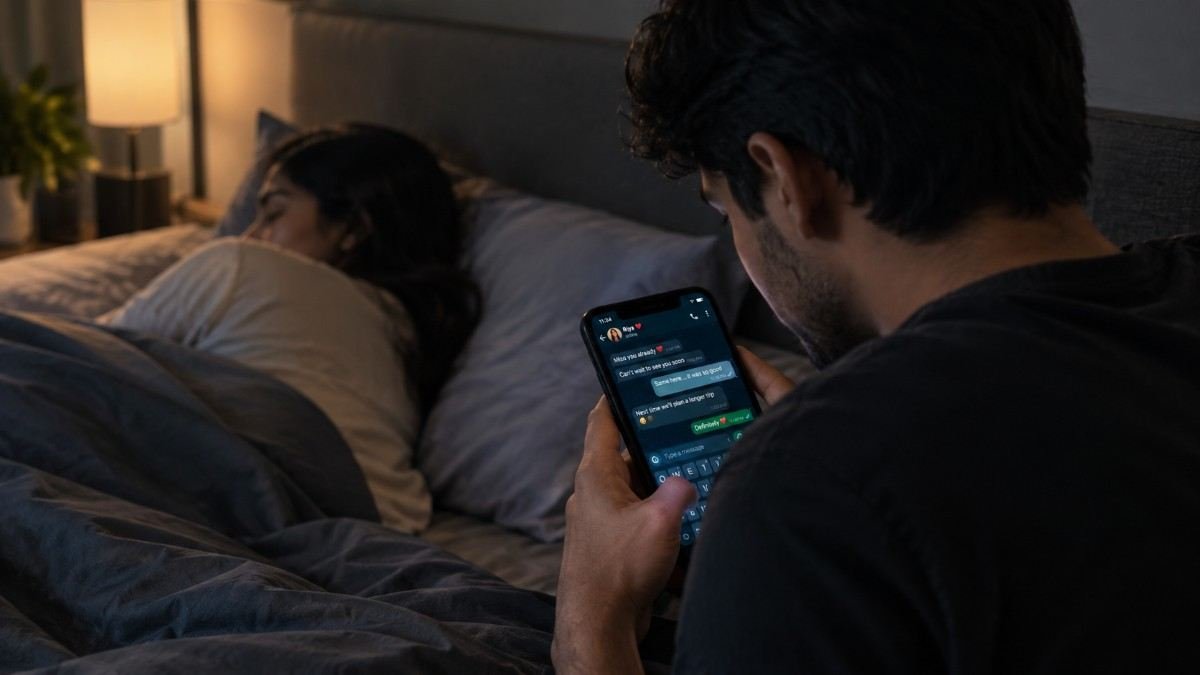
What counts as cheating in a relationship? Is it having sex with someone else, secretly flirting with a coworker, sending intimate messages to an ex, or developing feelings for someone outside your relationship? The answer isn’t always straightforward.
For some couples, cheating means any form of romantic or sexual contact with another person. For others, the biggest betrayal is the secrecy: the deleted messages, the hidden conversations, or the emotional connection their partner quietly builds with someone else.
Modern relationships have introduced even more complicated questions. Is subscribing to an adult creator’s private content a betrayal? Does flirting online count if you never intend to meet? Can a close friendship become an emotional affair? And what about forming a romantic attachment to an AI companion?
There isn’t one universal rule that answers every question. However, cheating generally involves violating the boundaries of a relationship, particularly when deception, romantic or sexual intimacy, and broken agreements are involved.
Understanding where the line falls can help you protect your relationship, communicate your expectations, and recognize when someone’s behavior has damaged your trust.
What Is Considered Cheating in a Relationship?
Cheating is commonly understood as behavior that violates the romantic, sexual, or emotional agreements between partners. It can involve physical intimacy, private online interactions, or a relationship that becomes emotionally intimate in ways that conflict with the couple’s expectations.
The important distinction is that not every action involving another person is automatically cheating. Having friends, finding someone attractive, enjoying a conversation, or occasionally thinking about an ex doesn’t necessarily mean someone is being unfaithful.
The context matters.
Consider these examples:
- Physical betrayal: Kissing, sexual contact, or other intimate behavior that violates your relationship’s agreements.
- Emotional betrayal: Secretly developing a romantic attachment or sharing a level of intimacy with someone else that undermines the partnership.
- Digital betrayal: Sending sexual messages, maintaining secret romantic conversations, or using dating apps in violation of an exclusivity agreement.
- Financial betrayal: Hiding spending, debts, or financial commitments when honesty about money is an agreed expectation in the relationship.
- Boundary violations: Doing something you and your partner explicitly agreed would be off-limits, then concealing it.
Financial dishonesty isn’t usually classified as romantic infidelity, but it can still be a serious breach of trust. The same applies to neglecting a relationship: it can cause real harm without necessarily being cheating.
A useful starting point is to distinguish between three questions:
- Did the behavior break an agreement?
- Was it deliberately hidden because the person knew it could affect their partner?
- Has it damaged the trust or intimacy the relationship depends on?
The answers won’t automatically determine what you should do, but they’ll help you understand why a particular action feels significant.
The Four Main Types of Cheating
Cheating doesn’t always look the same. Understanding its different forms can make it easier to identify the problem and discuss it without getting trapped in arguments over labels.
1. Physical or Sexual Cheating
Physical cheating involves sexual or intimate contact with someone outside the relationship when that contact violates the couple’s agreements.
Examples may include:
- Kissing someone romantically.
- Having sex with another person.
- Engaging in sexual touching or other intimate contact.
- Arranging secret sexual encounters.
- Repeatedly meeting someone for physical intimacy while pretending the relationship is exclusive.
Some couples consider even a passionate kiss a clear betrayal. Others have negotiated different boundaries. What matters is the agreement that actually exists, not an assumption that everyone follows the same rules.
The circumstances can affect how partners understand what happened. Was the encounter planned? Was it part of an ongoing affair? Did the person disclose it voluntarily? Have they taken responsibility?
These questions may help a couple decide whether rebuilding trust is possible. They don’t erase the betrayal or make the hurt partner responsible for forgiving it.
2. Emotional Cheating
Emotional cheating can occur when someone develops a secret romantic or emotionally intimate connection that compromises their existing relationship.
It may begin with ordinary friendship. Two people talk regularly, share personal problems, support each other through difficult moments, and gradually become increasingly important in each other’s lives.
Close friendships aren’t inherently inappropriate. Emotional intimacy is a normal part of human connection, and a healthy relationship shouldn’t require someone to abandon their friendships.
The concern arises when the connection takes on a romantic or secretive quality, replaces intimacy with a partner, or violates boundaries the couple has established.
Possible warning signs include:
- Confiding romantic or relationship-related feelings in someone while deliberately excluding your partner.
- Hiding how frequently you communicate with a particular person.
- Feeling jealous or possessive about that person’s romantic relationships.
- Turning to them for the emotional intimacy you’ve stopped sharing with your partner.
- Sharing private relationship details in a way that creates a secret alliance against your partner.
- Minimizing or denying your feelings because admitting them would expose a boundary violation.
Emotional cheating can be painful even when nothing physical happens. A partner may feel that someone else has been given the affection, attention, and vulnerability they believed were part of their relationship.
Still, having feelings isn’t automatically the same as cheating. People don’t always choose their initial attractions. The more meaningful questions are how they respond to those feelings, whether they nurture them secretly, and whether their actions violate their commitments.
3. Online and Digital Cheating
Digital communication makes it possible to maintain intimate connections without meeting someone in person. That can create genuine gray areas, especially when partners have different expectations about online behavior.
Digital cheating can include:
- Maintaining a secret profile on a dating app while in an exclusive relationship.
- Sending romantic or sexually suggestive direct messages.
- Having private video or phone-sex conversations.
- Pretending to be single when interacting with potential romantic partners.
- Hiding an ongoing online relationship that violates an agreed boundary.
- Using disappearing messages to conceal intimate conversations.
A conversation doesn’t become cheating simply because it takes place online. Friends joke, people socialize, and online communities can provide meaningful companionship.
The distinction is whether the interaction crosses an agreed boundary, becomes romantic or sexual in a way that conflicts with the relationship, or relies on deception.
For example, chatting with an old friend isn’t automatically inappropriate. Secretly telling that friend you’re single, exchanging sexual messages, and deleting the conversation to prevent your partner from discovering it is a different situation.
Digital behavior deserves the same honesty and accountability as behavior in person.
4. Sexting and Sexual Messaging
Sexting involves sending sexually explicit or suggestive messages, images, or videos. It may overlap with digital cheating, but it deserves separate attention because the sexual intention can be clear even when there is no physical contact.
Whether sexting constitutes cheating depends on the couple’s agreements. In an exclusive relationship where sexual messaging with others is off-limits, secretly exchanging explicit messages would generally violate that boundary.
Other questions may matter, too:
- Was the exchange consensual?
- Was the content shared privately or distributed without permission?
- Was the person communicating with a stranger, a friend, or a former partner?
- Was the exchange part of a larger affair?
- Had the couple discussed whether this behavior was acceptable?
Sending or sharing intimate images without someone’s consent is a separate violation and can have serious legal consequences. Consent matters regardless of the relationship status of the people involved.
What About Flirting? Does It Count as Cheating?
Flirting is one of the most common sources of disagreement between couples because people interpret it differently.
One person might see playful teasing as harmless social interaction. Another might consider prolonged, sexually suggestive attention to someone else disrespectful. Neither interpretation automatically applies to every relationship.
Think about the difference between these situations:
Usually ordinary social interaction: Giving someone a sincere compliment, making friendly conversation, or enjoying a lighthearted exchange without romantic intent or secrecy.
Potentially a boundary violation: Repeatedly sending suggestive messages to someone you’re attracted to, concealing those conversations, or encouraging someone to believe you’re romantically available.
More clearly a betrayal: Pursuing an ongoing secret flirtation after agreeing not to do so, especially when the interaction becomes sexual or romantic.
Intent matters, but it isn’t the only consideration. Someone may insist they were joking, while their behavior repeatedly communicates romantic interest. The impact, pattern, context, and agreed boundaries all deserve consideration.
Ask yourself whether the interaction is consistent with the expectations you and your partner have established. If you’re unsure, a direct conversation is more useful than assuming your partner shares your definition of innocent flirting.
Is Texting Someone Else Considered Cheating?
Texting is not inherently cheating. People communicate with friends, colleagues, relatives, and former partners for many legitimate reasons.
However, a private conversation can become inappropriate when it develops into a secret romantic or sexual connection.
Here are some situations to consider:
| Situation | What it may mean |
| Texting a friend about everyday life | Usually ordinary friendship |
| Sending occasional friendly messages to an ex | Depends on the context and agreed boundaries |
| Hiding repeated romantic messages from a partner | A possible breach of trust |
| Exchanging explicit messages with someone else | Sexual boundary violation if prohibited by the relationship agreement |
| Telling someone you’re single when you’re not | Deception that may facilitate romantic or sexual betrayal |
| Deleting messages to conceal an ongoing affair | Strong reason to question honesty and trust |
One deleted message doesn’t prove infidelity. People may value privacy for many reasons. But a repeated pattern of secrecy, contradictory explanations, and concealed romantic communication deserves an honest discussion.
The goal should not be to create a relationship in which every message is inspected. It should be to build enough trust that neither partner feels compelled to maintain a hidden romantic life.
Cheating in the Digital Age: New Gray Areas
Technology has expanded the ways people can experience attraction, intimacy, and sexual expression. Some situations are relatively easy to evaluate; others require couples to discuss expectations they may never have considered before.
1. Liking or Commenting on Attractive Photos
Liking a photo isn’t automatically cheating. Social media interactions can be casual, habitual, or entirely non-romantic.
The situation may feel different when someone repeatedly leaves sexual comments, sends private messages, or targets a particular person’s provocative posts while concealing their behavior.
Rather than treating every like as evidence of betrayal, discuss what kind of public and private interaction feels respectful in your relationship.
2. Following an Ex or Messaging an Old Crush
Remaining connected to an ex isn’t necessarily a problem. Former partners may share friendships, work responsibilities, or family commitments.
Potential issues arise when someone secretly tries to rekindle a romance, hides flirtatious conversations, or uses the connection to maintain an alternative romantic relationship.
The relevant question isn’t simply whether the person is an ex. It’s what the current interaction means and whether it respects the relationship’s boundaries.
3. Subscribing to Adult Content or OnlyFans
Couples have different views about pornography, paid adult content, and personalized interactions with creators.
Some consider viewing general adult content acceptable. Others see paid subscriptions, personalized sexual messages, or private exchanges as crossing a sexual or financial boundary.
A subscription alone doesn’t establish that someone has cheated. The nature of the interaction, whether money is being hidden, and the couple’s expectations all matter.
If this is important to either partner, discuss it before resentment builds. Be specific about what is acceptable rather than assuming that a vague agreement about pornography covers every possible situation.
4. Developing an Attachment to an AI Companion
AI companions can simulate affectionate conversations, romantic role-play, and emotionally supportive interactions. This creates a newer question: can a relationship with an artificial companion violate a commitment to a human partner?
There is no universal answer. Some couples may view AI role-play as fantasy, while others may feel betrayed if a partner secretly maintains a romantic or sexual AI relationship.
Consider whether the interaction conflicts with an explicit agreement, involves substantial secrecy, or is replacing emotional engagement that both partners expect from their relationship.
The technology itself doesn’t determine whether cheating has occurred. The couple’s boundaries and the meaning of the behavior matter.
5. Romantic or Sexual Interactions in Virtual Reality
Virtual reality can involve avatars, immersive social experiences, romantic role-play, and sexual interactions.
Even without physical contact between the participants, an experience may feel like a genuine boundary violation to a partner who considers virtual sexual activity outside the relationship unacceptable.
Discuss what counts as sexual or romantic interaction in virtual spaces, especially if either person participates in immersive adult experiences or maintains ongoing virtual relationships.
6. Gaming Friendships That Become Intimate
Playing games with someone for hours doesn’t automatically mean a relationship is becoming inappropriate. Shared interests and online friendships can be healthy.
However, gaming may become the setting for an emotional affair if two people develop a secret romantic connection, exchange intimate messages, or deliberately conceal how emotionally involved they have become.
The issue isn’t the game. It’s the nature of the relationship developing around it.
7. Secret Dating Profiles
Keeping an active dating profile while agreeing to an exclusive relationship is generally a serious warning sign, especially if the person is seeking romantic or sexual connections.
There can be exceptions, such as a dormant account that someone forgot to delete or a profile used for a mutually agreed non-monogamous arrangement.
Clarify what the profile is being used for and whether its existence violates the agreement. Don’t assume every account proves an affair, but don’t ignore credible evidence of active deception.
What Is Micro-Cheating?
Micro-cheating is an informal term for relatively small behaviors that may undermine trust or suggest romantic interest outside a relationship.
Examples sometimes include hiding contact with an ex, keeping a dating profile active, flirting in private, or deliberately presenting yourself as available to someone you’re attracted to.
The term can be useful when it describes a pattern of boundary-testing behavior. However, it can also be used too broadly to label ordinary interactions as betrayal.
For example, having a friendly conversation with a coworker, maintaining a healthy friendship, or liking someone’s post shouldn’t automatically be treated as cheating.
A better approach is to examine the specific behavior:
- Is there an explicit agreement that it violates?
- Is the person deliberately creating a false impression?
- Is there an ongoing romantic or sexual intention?
- Is secrecy being used to continue something the partner would reasonably expect to know about?
- Is the behavior part of a repeated pattern rather than an isolated misunderstanding?
The answers provide more clarity than the label alone.
Can You Cheat Without Physical Contact?
Yes. A person can violate a relationship’s boundaries without kissing, touching, or having sex with another person.
For example, secretly maintaining a romantic online relationship may constitute cheating in a monogamous partnership even if the people involved never meet.
Similarly, someone may exchange explicit messages or deliberately cultivate an emotional affair without any physical contact.
But it’s important to make a distinction: attraction, fantasy, friendship, and betrayal are not automatically the same thing.
Having a passing crush doesn’t necessarily mean someone has been unfaithful. Neither does privately noticing another attractive person. What matters is how the person acts, what commitments they’ve made, and whether they knowingly violate those commitments.
A relationship doesn’t require partners to control every thought or feeling. It does require honesty about behavior that affects the partnership.
Is Emotional Cheating Worse Than Physical Cheating?
There is no universal ranking of emotional and physical infidelity. Different people experience these forms of betrayal differently, and the circumstances can strongly influence the impact.
Someone may find sexual contact especially devastating because it violates an explicit promise of sexual exclusivity. Another person may be more distressed by an emotional affair because it suggests that their partner has developed a romantic attachment elsewhere.
Other people find the secrecy itself most painful, regardless of whether the affair was emotional or physical.
Several factors can influence the damage:
- Duration: Was it a single incident or a connection maintained over months?
- Deception: Did the person lie repeatedly or conceal important details?
- Emotional involvement: Did the affair involve attachment, romantic commitment, or future plans?
- Risk: Was there potential exposure to sexually transmitted infections or financial harm?
- Accountability: Has the person acknowledged the behavior without blaming their partner?
- Pattern: Is this an isolated breach or part of repeated dishonesty?
You don’t need to prove that your experience was worse than someone else’s to justify feeling hurt. What matters is how the betrayal affected you and whether the relationship can become trustworthy again.
Can You Cheat in an Open Relationship?
Yes. Non-monogamy doesn’t mean that every possible interaction is automatically acceptable.
Open relationships and polyamorous partnerships can have clear agreements about safer sex, disclosure, emotional involvement, time commitments, privacy, and communication with other partners.
A violation can occur when someone breaks those agreements.
For example, a couple might agree to disclose new sexual partners before an encounter. Secretly meeting someone and deliberately withholding that information could violate their agreement even if outside sexual relationships are permitted.
Another couple might welcome romantic connections but have specific expectations about safer-sex practices. Ignoring those expectations can put a partner’s health at risk.
The central distinction is between consensual non-monogamy and deception. A relationship’s structure doesn’t eliminate the need for honesty, informed consent, and accountability.
Financial Infidelity: When Money Becomes a Secret
Financial infidelity is different from romantic or sexual cheating, but it can still damage a relationship deeply.
It involves concealing significant financial behavior when partners have an agreement or reasonable expectation of financial transparency.
Examples include:
- Hiding substantial debts.
- Secretly spending shared money on major purchases.
- Concealing financial accounts when disclosure has been agreed upon.
- Gambling away money needed for shared responsibilities while lying about it.
- Secretly sending substantial sums to another person in ways that affect shared finances.
Not every purchase requires permission, and partners can maintain reasonable financial privacy. The issue is whether the secrecy undermines an agreement, shared obligations, or informed financial decision-making.
If money is shared, establish clear expectations about budgets, debt, savings, major purchases, and personal spending. Transparency works best when the rules are mutually agreed upon rather than imposed by one partner.
Is Neglecting Your Partner a Form of Cheating?
Neglect can be painful, but it is not automatically infidelity.
A person who spends every evening working, gaming, exercising, or pursuing another hobby may be failing to invest in their relationship. That can lead to loneliness and resentment, particularly when requests for connection are repeatedly dismissed.
However, spending too much time on a hobby is usually better described as a relationship problem than cheating.
The distinction matters because different problems require different solutions.
If one partner feels neglected, the couple may need to discuss quality time, emotional availability, shared responsibilities, or whether their needs are compatible. If the neglected partner begins a secret romantic relationship with someone else, that introduces a separate issue involving the agreements and trust within the relationship.
You can take emotional neglect seriously without labeling every form of disconnection as infidelity.
What About Falling in Love With Someone Else?
People in committed relationships can experience unexpected attraction or develop feelings for another person. Having a feeling is not the same as choosing to pursue an affair.
The important questions concern what happens next.
Does the person acknowledge the attraction and establish appropriate boundaries? Or do they deliberately nurture the connection, conceal its significance, and create a second romantic relationship while maintaining the first?
It’s possible for someone to care deeply about their partner while experiencing attraction elsewhere. That doesn’t automatically make every relationship unsustainable.
But if a person wants to pursue another relationship, they need to address their existing commitments honestly rather than assuming they can secretly maintain both without consequences.
Feelings may arise without permission. Decisions about honesty, intimacy, and commitment still require responsibility.
How to Decide What Counts as Cheating in Your Relationship
If you and your partner have never discussed infidelity beyond agreeing not to have sex with other people, you may have different assumptions about everything else.
Rather than waiting for a conflict, talk about boundaries when you’re both calm.
1. Define Physical Boundaries
Discuss what exclusivity means to each of you. Does it include kissing, sexual touching, exchanging intimate images, or other forms of sexual interaction?
Don’t assume that the word monogamous automatically answers every question.
2. Discuss Emotional Intimacy
You don’t need to restrict your partner’s friendships. Instead, talk about what each of you considers an inappropriate romantic attachment.
For instance, are secret romantic declarations acceptable? What about telling someone else you’re in love with them? How do you feel about an ex becoming a major source of emotional support?
The goal is to protect your relationship without treating normal friendship as a threat.
3. Set Digital Boundaries
Discuss dating apps, direct messages, sexting, adult content, online role-play, and contact with ex-partners.
Be precise. “Don’t do anything disrespectful” can mean very different things to two people.
A more useful agreement might be: “We’re comfortable with friendships and casual social media interaction, but we won’t send sexual messages to other people or conceal romantic conversations.”
4. Talk About Privacy and Secrecy
Being in a relationship doesn’t mean surrendering every password, message, or private conversation. Healthy privacy allows each person to maintain individuality.
Secrecy becomes a concern when someone deliberately hides behavior that violates an agreement or materially affects their partner’s choices.
Discuss what transparency means to both of you. Don’t make constant surveillance a substitute for trust.
5. Review Boundaries as Your Relationship Changes
People’s expectations can change as a relationship develops. Moving in together, getting married, becoming parents, opening a relationship, or experiencing a major breach of trust may prompt new conversations.
Revisiting boundaries doesn’t mean the relationship is failing. It can help both partners understand what commitment means to them now.
Signs That a Boundary May Have Been Crossed
One behavior rarely tells the whole story. Still, certain patterns can indicate that a conversation about trust is needed.
Watch for a combination of behaviors such as:
- Repeatedly lying about contact with a particular person.
- Hiding romantic or sexual conversations after agreeing to be transparent about them.
- Maintaining an active dating profile while claiming to be exclusive.
- Giving contradictory explanations about significant interactions.
- Continuing behavior after a clear, mutually understood boundary has been discussed.
- Blaming you for discovering a lie instead of addressing the underlying behavior.
- Refusing to discuss a credible concern while expecting you to trust unsupported assurances.
These signs aren’t proof of cheating on their own. Someone may be private, stressed, or uncomfortable discussing a sensitive friendship without being unfaithful.
Focus on specific evidence, consistent patterns, and direct communication rather than relying on stereotypes or trying to interpret every change in behavior as a confession.
What Should You Do If Your Partner Has Cheated?
Discovering a betrayal can leave you angry, confused, embarrassed, or unsure whether you want the relationship to continue. You don’t have to decide everything immediately.
1. Give Yourself Time to Process
If you have just discovered something upsetting, take a little time before making a major decision, provided you are safe.
You might need space, a conversation with someone you trust, or time to understand what you actually know. You are allowed to feel hurt without immediately deciding whether to stay or leave.
2. Separate Facts From Assumptions
Try to identify what you know, what you suspect, and what remains unclear.
A suspicious message and a confirmed ongoing affair are not the same situation. Ask direct questions about the behavior rather than filling every gap with the worst possible explanation.
This doesn’t mean dismissing your instincts. It means making decisions using the clearest information available.
3. Have an Honest Conversation
When it feels safe to do so, explain what you discovered and why it matters to you.
Ask what happened, whether it is ongoing, and whether your partner understands the boundary that was crossed. Notice whether they respond with honesty and accountability or focus entirely on defending themselves.
You do not have to accept blame for another person’s decision to deceive you.
4. Consider Your Emotional and Physical Well-Being
If sexual contact may have exposed you to an infection, consider speaking with a healthcare professional about testing and appropriate precautions.
If the betrayal has affected your sleep, concentration, or emotional stability, seek support from someone you trust or a qualified mental health professional.
You deserve care while you work out what comes next.
5. Decide Whether Rebuilding Trust Is Realistic
Some couples decide to work through infidelity. Others recognize that the relationship no longer meets their needs or that the trust cannot be restored.
If you choose to stay, rebuilding may require:
- A clear end to the behavior that violated the agreement.
- Honest answers about important facts.
- Accountability without minimizing the harm.
- Mutually agreed boundaries going forward.
- Time and consistent behavior rather than promises alone.
- Couples counselling, if both partners are willing and it is appropriate.
Forgiveness is not compulsory, and reconciliation isn’t proof of greater love or maturity. Leaving is also a valid choice.
If the betrayal is part of a repeated pattern of manipulation, intimidation, or coercion, prioritize your safety and seek appropriate support rather than feeling obligated to repair the relationship.
Can a Relationship Recover After Cheating?
Yes, some relationships recover after infidelity, but reconciliation is not guaranteed and should never be treated as an obligation.
Recovery usually depends on more than an apology. The person who broke the agreement must be willing to acknowledge what happened, understand its impact, and demonstrate a sustained commitment to behaving differently.
The hurt partner may need time, clarity, and reassurance. They may also discover that they no longer want to continue the relationship. Both outcomes are legitimate.
Trust is rebuilt through repeated experiences of honesty, not by demanding that someone forget the past.
If you decide to reconcile, discuss what each of you needs to feel secure. If you decide to separate, you can still learn from the experience without blaming yourself for someone else’s choices.
Frequently Asked Questions
Is flirting considered cheating?
Not always. Friendly or playful flirting may be acceptable in some relationships. Secretive, sexually explicit, or sustained romantic flirting may violate the couple’s boundaries, particularly if it involves deception or breaks an agreement.
Is liking another person’s pictures cheating?
Usually, a lie alone is not enough to establish cheating. Repeated sexual comments, secret direct messages, or interactions that violate a clear agreement may be more significant. Context matters.
Is talking to an ex considered cheating?
No, not automatically. People can maintain respectful friendships with former partners. Secret romantic communication, attempts to rekindle a relationship, or behavior that violates agreed boundaries can become a different matter.
Is watching pornography cheating?
Couples differ in how they view pornography. Some consider it acceptable, while others have clear boundaries around it. Discuss expectations about content, private interactions, spending, and honesty instead of assuming every couple follows the same rules.
Is sexting cheating if you never meet the other person?
It can be. If sexual messaging violates an agreement of exclusivity, the absence of physical contact doesn’t necessarily make it acceptable to the other partner.
Can emotional cheating happen without romantic feelings?
A close friendship doesn’t automatically become an emotional affair. However, a secret connection that undermines the relationship or violates agreed boundaries can still damage trust, even if the person involved disputes whether they have romantic feelings.
Is cheating possible in a long-distance relationship?
Yes. Distance doesn’t change the need to respect relationship agreements. Physical encounters, secret romantic connections, and sexual messaging may violate boundaries just as they can in relationships where partners live nearby.
Does cheating always mean a relationship should end?
No. Some people choose to reconcile, while others decide to leave. The right decision depends on the circumstances, the people involved, their boundaries, their safety, and whether rebuilding trust is genuinely possible.
If my partner says it wasn’t cheating, am I wrong to feel hurt?
No. Your feelings deserve to be taken seriously. However, disagreement about a previously undefined boundary is different from deliberately breaking an explicit agreement. Discuss what happened, what each person understood, and what needs to change.
Is keeping secrets the same as cheating?
No. People can have healthy privacy without being unfaithful. The concern is deliberate concealment of behavior that violates a relationship agreement or materially undermines trust.
Final Thoughts
Cheating isn’t limited to one universally agreed list of actions. It can involve physical intimacy, secret romantic relationships, sexual messaging, or digital behavior that violates the agreements between partners.
But it’s equally important not to confuse every friendship, passing attraction, social media interaction, or private thought with infidelity.
The most useful definition is one that reflects the commitments you’ve actually made to each other. Healthy boundaries should be clear, mutual, and open to honest discussion. They shouldn’t depend on mind-reading, constant monitoring, or rules that one partner imposes without the other’s agreement.
If you’ve been betrayed, you are allowed to take your hurt seriously and decide what you need. If you’ve crossed a boundary, you can take responsibility without minimizing the impact or blaming your partner.
Ultimately, a strong relationship doesn’t depend on eliminating every possible temptation. It depends on honesty, respect, mutual understanding, and the choices both partners make when their commitments are tested.

Dating & Relationship Writer
Years of Experience: 10+.
Location: Sydney, Australia
Sophie Bennett writes about dating, love, relationship challenges, and emotional well-being. Her articles cover topics such as understanding mixed signals, recognising unhealthy relationship patterns, improving communication, and building stronger romantic connections.
With a warm and practical writing style, Sophie aims to make relationship topics easier to understand and relatable to everyday life. Her goal is to help readers navigate modern dating, understand their feelings, and approach relationships with greater clarity and confidence.