
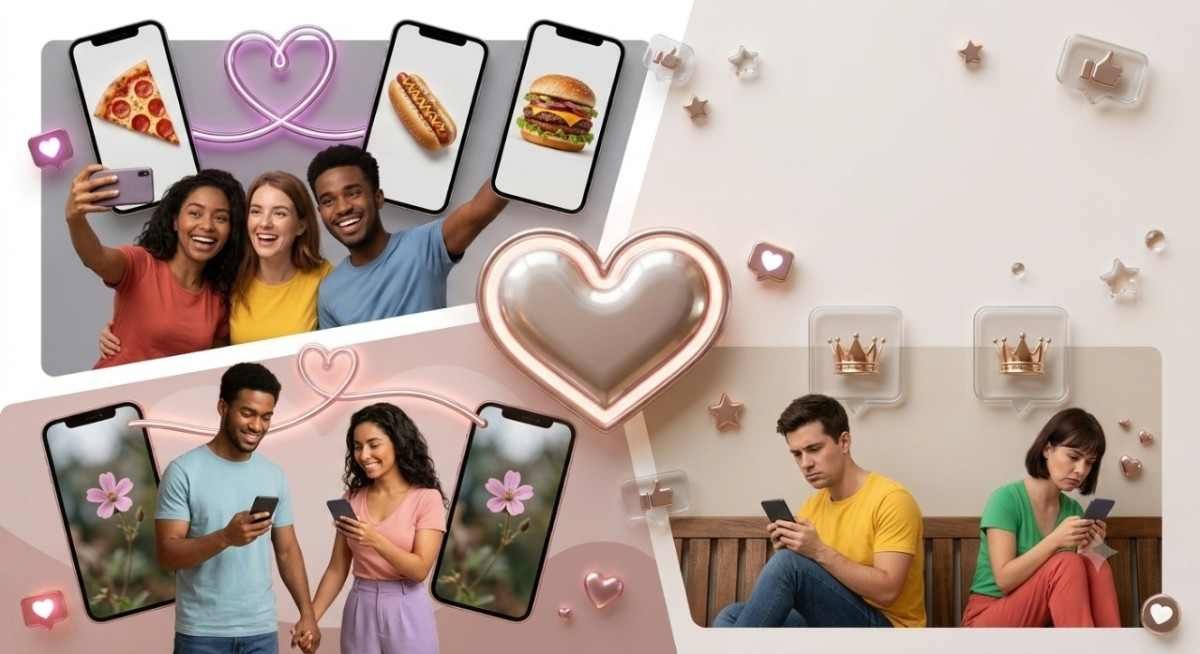
You’re scrolling through Instagram, Discord, or TikTok when something catches your eye. Your crush has a new profile picture, and it looks suspiciously similar to someone else’s. Maybe they’re using two halves of the same image. Maybe they’ve chosen matching anime characters. Or perhaps their icons simply have the same colors, style, and unmistakable couple energy.
Naturally, you start wondering: Are they dating? Are they flirting? Or am I reading too much into a profile picture?
Matching PFPs, short for matching profile pictures, are a popular way for people to express a connection online. Couples use them to celebrate their relationship, friends use them to show off their bond, and people with a crush sometimes use them to flirt without saying anything outright.
But matching profile pictures aren’t a universal declaration of love. Their meaning depends on the people involved, the context, and what happens beyond the screen.
Whether you want matching icons with your partner, are hoping to drop a subtle hint to your crush, or have spotted your significant other matching with someone else, here’s what you need to know.
What Does Matching PFPs Mean?
Matching PFPs are coordinated profile pictures used by two or more people. The images might form one complete picture when placed together, feature complementary characters, share an aesthetic, or simply reflect a common interest.
For example, two friends might use matching cartoon characters, while a couple might choose illustrations of two characters holding hands. Someone with a crush might suggest matching icons as a playful way to create a shared connection.
The important distinction is that matching PFPs show a deliberate visual connection, but they don’t automatically reveal whether that connection is romantic.
Here are four common interpretations:
- Friendship: Two people want to celebrate their closeness or shared interests.
- Romantic interest: A couple or potential couple wants a cute, coordinated way to express affection.
- Shared identity: Friends, gaming teammates, or fandom members want to show that they belong together.
- Aesthetic preference: People simply enjoy the artwork, characters, colors, or theme.
The same matching PFP can mean completely different things to different people. That’s why context matters more than the image itself.
Why Do People Use Matching PFPs?
A profile picture is a small part of someone’s online identity, but choosing one together can make an ordinary digital interaction feel personal.
Here are some reasons people enjoy matching icons.
1. To Show They’re Close
Matching profile pictures can communicate, “We’re friends,” “We’re a team,” or “This person is important to me.”
Unlike a private message, a profile picture is visible to other people. Coordinating it gives friends or partners a simple way to celebrate their connection without writing a long caption.
2. To Express Romantic Feelings
For some couples, matching icons are a fun alternative to posting relationship announcements or uploading pictures together.
People with a crush may also use them to test the waters. Suggesting matching characters can feel less intimidating than directly admitting romantic feelings.
However, agreeing to match doesn’t necessarily mean both people have romantic intentions. One person might see it as flirting while the other sees it as an amusing friendship activity.
3. To Share an Inside Joke
Sometimes the explanation is much less romantic than it looks.
Two people might choose matching pictures of ridiculous memes, rival characters, or animals with exaggerated expressions because the images remind them of a private joke.
If nobody else understands the pairing, that’s part of the fun.
4. To Feel Like Part of a Team
Matching PFPs are especially common in online communities, gaming groups, fandoms, and friend circles.
A coordinated icon can create a sense of belonging. It lets people recognize their group and express a shared identity without needing matching usernames or elaborate bios.
5. To Create a Small Relationship Ritual
Couples often develop little habits that feel special to them, such as sharing a playlist, watching a particular show together, or celebrating an anniversary.
Changing profile pictures together can become another one of those rituals. The activity itself may be simple, but the shared memory makes it meaningful.
6. To Get Someone’s Attention
A matching PFP can be a subtle way to make another person notice a connection.
Perhaps two people use complementary characters, or one changes their icon shortly after the other does. It might be an intentional hint, but it could also be coincidence or a shared trend.
If you’re wondering whether someone is flirting, look at their broader behavior rather than trying to decode every icon change.
Where Did Matching PFPs Come From?
Matching profile pictures developed alongside online fandoms, gaming communities, and the broader culture of digital self-expression.
People have long coordinated their online identities through usernames, avatars, signatures, and profile themes. As social platforms made profile pictures central to how users present themselves, matching icons became another way to express friendship, fandom, and romance.
Anime and gaming communities helped popularize coordinated avatars featuring paired characters. Social platforms such as Discord also made it easy for friends and partners to display complementary pictures in conversations and servers.
Today, matching PFPs can appear almost anywhere people maintain online profiles. Some are obvious couple pictures, while others are subtle enough that only the people involved understand the connection.
The trend isn’t limited to one generation or platform. Anyone who enjoys coordinated aesthetics or wants to celebrate a connection can take part.
32 Subtle, Flirty Things to Know About Matching PFPs
Matching profile pictures can reveal something about how people interact online, but their meaning depends on the situation. These 32 points can help you understand the possibilities without treating every matching icon as proof of a relationship.
What Matching PFPs Can Mean
1. They can signal a special connection.
When two people deliberately coordinate their icons, they are choosing to present some kind of connection. That might be romantic, friendly, creative, or based on a shared interest.
2. They don’t automatically mean two people are dating.
This is the most important thing to remember. Best friends, siblings, gaming partners, and fandom friends match PFPs all the time.
3. They can be a low-pressure way to flirt.
Suggesting matching pictures can introduce a playful sense of intimacy without requiring either person to make a direct romantic confession.
4. They may reflect an inside joke.
Two people might choose unusual or silly images because the pairing means something to them. Outsiders may interpret it romantically when the real explanation is much simpler.
5. They can show shared interests.
Matching characters from the same anime, game, or television series may be a way of celebrating something both people love.
6. They can express belonging.
Friends who match icons may want to show that they are part of the same group. In gaming communities, this can be a playful way of displaying team spirit.
7. They can be a form of online affection.
For couples, coordinated profile pictures can become a small, visible expression of affection. The meaning comes from the relationship behind the pictures, not just the artwork.
8. They can be intentionally ambiguous.
Some people enjoy letting others wonder whether they’re dating. A matching PFP can create curiosity without confirming anything about the relationship.
What Matching PFPs With a Crush Might Mean
9. Your crush may be testing the waters.
If someone suggests matching PFPs specifically with you, they might be exploring whether you’re comfortable sharing a more personal connection. Still, it isn’t a guaranteed confession.
10. They may want an excuse to spend time with you.
Choosing images together gives you something fun to discuss. If the conversation continues naturally and they seem genuinely interested in you, that may be more meaningful than the profile pictures themselves.
11. They might be flirting through humor.
A playful suggestion such as “We should get matching icons” can be a lighthearted way to flirt while keeping the interaction casual.
12. They may enjoy feeling connected to you online.
Matching can create a small shared activity that makes your interactions feel more personal. Whether that closeness is romantic depends on how both of you understand it.
13. They may want others to notice your connection.
Some people like making their friendships or relationships visible. Others prefer keeping their personal lives private. A matching PFP alone won’t tell you which motivation applies.
14. They may be waiting to see how you respond.
If your crush proposes matching icons, they might be curious whether you’ll enthusiastically agree, joke about it, or change the subject. Your response can help both of you understand each other’s comfort levels.
15. They may see you as a close friend rather than a romantic prospect.
It’s easy to assume a matching PFP means attraction when you already like someone. But if they match with several friends or regularly participate in the trend, it may simply be part of their online personality.
16. Their other actions matter more than their PFP.
Consistent communication, genuine curiosity about your life, respectful flirting, and making time for you offer more useful clues about romantic interest than a coordinated avatar.
What It Could Mean When Your Partner Matches With Someone Else
17. The other person could be a close friend.
Before assuming the worst, consider whether your partner has a close friendship with that person. Matching icons can be a normal expression of platonic affection.
18. It could be part of a gaming or fandom community.
If both people belong to the same online group, the images might reference a game, show, or character pairing. Ask about the context before deciding what it means.
19. They might have chosen the pictures for aesthetic reasons.
Sometimes people coordinate icons because the artwork looks good together. Not every visual pairing represents emotional intimacy or attraction.
20. It could be a romantic hint.
In some situations, matching icons are part of flirtation or an attempt to signal a relationship. That possibility becomes more relevant when other behavior also suggests romantic interest, but the pictures alone aren’t enough to establish it.
21. The secrecy may be more concerning than the image.
If your partner actively hides the connection, gives contradictory explanations, or repeatedly lies about their interactions with the other person, those behaviors deserve attention in their own right.
22. You might feel jealous even if nothing inappropriate happened.
Seeing your partner share a playful or intimate-looking symbol with someone else can trigger insecurity. Your feelings are worth acknowledging, but they don’t automatically prove that your partner has crossed a boundary.
23. Different people attach different meanings to matching icons.
Your partner may consider a matching PFP harmless, while you associate it with romance. Neither interpretation automatically settles the issue. Discussing what it means to each of you can reveal whether you have different expectations.
24. It’s an opportunity to discuss relationship boundaries.
You don’t need to establish rules for every online interaction. But if certain forms of public flirting, secrecy, or romantic signaling make you uncomfortable, a calm conversation can help you decide what feels respectful in your relationship.
How to Read the Situation More Clearly
25. Notice whether matching is normal for them.
Someone who matches PFPs with several friends is different from someone who reserves the practice for one particular person. This is context, not proof of romantic intent.
26. Look at the type of images without overinterpreting them.
A split-heart illustration might appear romantic, while two unrelated cartoon characters might be an inside joke. Even apparently romantic artwork can be used platonically, so treat the imagery as a clue rather than a conclusion.
27. Consider whether the connection is openly acknowledged.
If your partner openly talks about the friend and explains the matching icons, that provides context. Secrecy can be worth discussing, but privacy by itself doesn’t prove wrongdoing.
28. Pay attention to consistency.
Do the person’s words and actions align? Someone who communicates honestly and respects your feelings gives you more reason to trust them than someone whose explanations repeatedly change.
29. Don’t use profile pictures as your only source of evidence.
Avoid building an entire story from screenshots, likes, matching colors, or the timing of a profile update. Online signals are easy to misread when emotions are involved.
30. Ask a direct but non-accusatory question.
You can say, “I noticed your profile pictures match. Is there a story behind them?” This invites an explanation without accusing anyone of cheating.
31. Explain your feelings without demanding an immediate change.
If the situation bothers you, try explaining why. You can ask for reassurance or discuss boundaries while still allowing your partner to share their perspective.
32. Judge the relationship by the whole pattern, not one icon.
A matching PFP can be cute, confusing, or uncomfortable. But the bigger questions are whether you trust each other, communicate honestly, and respect the boundaries you’ve agreed on.
The Most Common Matching PFP Styles
If you’re thinking about matching with a partner or friend, there are plenty of styles to choose from. You don’t have to use an obvious couple illustration to create a coordinated look.
1. Split Images
One image is divided into two parts, with each person using one half as their profile picture. When displayed next to each other, the images form a complete design.
Split hearts, landscapes, character portraits, and minimalist illustrations are popular choices.
2. Matching Anime Characters
Anime characters offer endless possibilities, from romantic pairs to rivals and best friends. You can choose characters who are canonically together or simply enjoy their dynamic.
Just remember that matching fictional characters doesn’t necessarily define the relationship between the people using them.
3. Complementary Cartoon Characters
Two cartoon characters with contrasting personalities can make a funny or affectionate pairing. This style works especially well for friends who enjoy teasing each other.
4. Matching Color Palettes
You don’t need identical pictures to match. Two images featuring the same pastel shades, dark aesthetic, or vintage filter can look coordinated without being obvious.
5. Matching Memes
For people whose friendship revolves around jokes, meme PFPs may be the perfect choice. Think chaotic characters, reaction images, or two pictures that make sense only when placed together.
6. Game Avatars
Gaming partners can choose characters from the same game or avatars that complement one another. This can celebrate a shared hobby without necessarily implying romance.
7. Minimalist Symbols
Matching moons, stars, flowers, hearts, or abstract shapes are ideal for people who prefer a subtle aesthetic.
8. Seasonal or Holiday Icons
You can match for a limited time with Halloween characters, winter illustrations, Valentine’s Day artwork, or other seasonal themes. It’s a simple way to participate without committing to one look permanently.
How to Choose Matching PFPs With Your Crush or Partner
Matching profile pictures should be fun for everyone involved. If you want to suggest the idea without making things awkward, try these steps.
Step 1: Bring It Up Casually
You don’t need a dramatic confession. Send them a pair of images you like and ask, “Would you be up for matching these?”
A casual invitation makes it easier for them to say yes, suggest another option, or decline without feeling pressured.
Step 2: Pick a Style That Suits Both of You
Think about what you have in common. Do you both love anime, gaming, memes, or a particular aesthetic?
Choosing something you genuinely enjoy together makes the activity feel more personal than picking an image solely because it looks romantic.
Step 3: Decide What Matching Means to You
If you’re dating, you might see matching icons as a cute public gesture. If you’re still getting to know each other, you may prefer something less obviously romantic.
There’s no need to assign a serious label to the activity unless you both want to discuss what it means.
Step 4: Choose Images You’re Both Comfortable Using
Consider where you’ll display them and whether you want the pairing to be obvious. Some people enjoy attention, while others would rather keep their relationships private.
Both preferences are valid. The goal is to find a style that suits you both.
Step 5: Make the Change Together
You can agree on a time to update your pictures, send each other screenshots, or simply change them whenever you’re ready.
The small shared moment may be part of the fun, especially if you enjoy creating memories together.
Step 6: Keep It Flexible
Matching PFPs aren’t a commitment that has to last forever. Someone may want a new picture, prefer a different aesthetic, or simply feel like changing their profile.
Try not to treat a switch back to an individual picture as a relationship verdict without considering the circumstances.
What Should You Do If Your Partner Has Matching PFPs With Someone Else?
Discovering that your partner has matching profile pictures with another person can be uncomfortable, especially if the images look romantic or you weren’t aware of the connection.
Before confronting them, give yourself a moment to separate what you know from what you’re imagining.
Start With What You Actually Know
You know the pictures match. You may not know who suggested them, why they chose them, or what the relationship between the two people is like.
Keeping that distinction in mind can prevent an uncomfortable discovery from turning into an accusation before you have the facts.
Ask Without Accusing
You could say:
“Hey, I noticed your profile picture matches with someone else. I wasn’t sure what it meant, so I wanted to ask about it.”
This gives your partner an opportunity to explain the situation. Listen to the answer and consider whether it fits what you already know.
Explain Why It Matters to You
If you feel uncomfortable, be specific about what bothers you. Perhaps the images look romantic, perhaps you feel excluded, or perhaps the situation raises questions because of other behavior.
Try saying:
“I know matching pictures don’t automatically mean anything romantic, but this particular pairing made me feel unsure. Can we talk about what it means to you?”
This communicates your feelings without treating your interpretation as an established fact.
Discuss Boundaries Rather Than Trying to Control Everything
Healthy relationship boundaries are about what each person needs to feel respected and what they are willing to accept in a relationship.
You can discuss whether certain forms of flirting, secrecy, or romantic-looking public displays feel appropriate to both of you. Your partner can share their own perspective, too.
The aim isn’t to control every friendship or online interaction. It’s to understand whether your expectations are compatible and whether you can reach an agreement that respects both people.
Look for a Pattern of Behavior
One matching PFP isn’t enough to establish infidelity. Repeated dishonesty, secretive behavior that violates agreed boundaries, or persistent dismissiveness about legitimate concerns may point to a larger relationship problem.
If the conversation leaves you with unresolved concerns, focus on those specific behaviors instead of trying to prove something from the pictures alone.
What If Your Crush Has Matching PFPs With Someone Else?
This situation can be particularly frustrating because you might not know whether your crush is single, interested in someone else, or simply close to a friend.
The best approach is to avoid treating matching profile pictures as a relationship announcement unless the people involved have actually confirmed that.
If you feel comfortable, you can ask casually about the pairing. Otherwise, observe how your crush interacts with you and whether they show consistent interest.
If you discover that they’re dating someone, respect that relationship and give yourself room to move on if you need it. You don’t have to compete with another person or turn every online interaction into a mystery to solve.
And if their relationship status remains unclear, you can always communicate directly when the time feels right. A respectful conversation will tell you more than endless profile-picture analysis.
Matching PFPs vs. Matching Bios: Is There a Difference?
Matching profile pictures and matching bios can both signal a connection, but they communicate it in different ways.
A matching PFP is primarily visual. The connection might be obvious, subtle, or completely understandable only to the people involved.
Matching bios can be more direct. Two people might use complementary phrases, shared emojis, initials, or references to the same inside joke. Depending on the wording, this can make their connection easier for others to recognize.
Neither is definitive proof of romance. Friends can coordinate bios, couples can keep their profiles separate, and some people enjoy matching online aesthetics without attaching much meaning to them.
The useful question isn’t which signal is stronger in isolation. It’s whether the people involved have explained their connection and whether their behavior aligns with what they say.
Are Matching PFPs a Red Flag?
Not by themselves. Matching profile pictures are a normal part of online self-expression, and many people use them with friends, partners, and fandom communities.
However, a matching PFP may prompt a conversation if it appears alongside other concerning behavior.
For example:
- Your partner repeatedly lies about their relationship with the other person.
- They openly flirt in ways that violate boundaries you’ve agreed on.
- They dismiss every attempt to discuss your concerns.
- Their explanations repeatedly contradict what they have told you before.
- You feel that the issue reflects a broader pattern of secrecy or disrespect.
Even then, the concern comes from the overall behavior, not simply from the fact that two people have coordinated profile pictures.
Likewise, feeling jealous doesn’t make you irrational or automatically mean your partner has done something wrong. Feelings can highlight a need for reassurance or a conversation about expectations.
You don’t have to ignore your discomfort, but you also don’t need to assume the worst.
Frequently Asked Questions
What does PFP stand for?
PFP stands for profile picture. It’s the image someone uses to represent themselves on a social media account, messaging app, gaming platform, or online community.
What do matching PFPs mean in a relationship?
For couples, matching PFPs can be a way to express affection, share a visual identity, or celebrate their relationship online. For friends, they can represent closeness, shared interests, or inside jokes. The meaning depends on the people involved.
Do matching PFPs mean two people are dating?
No. Matching profile pictures don’t automatically mean two people are romantically involved. They may be friends, gaming partners, relatives, or members of the same fandom.
What does it mean if my crush asks me to match PFPs?
It may be a playful invitation, a sign that your crush enjoys spending time with you, or a subtle attempt to flirt. It could also be completely platonic. Consider their other behavior and communicate if you want to understand their intentions.
Is matching PFPs a way to soft-launch a relationship?
Sometimes. A couple might use complementary profile pictures to hint at their relationship without announcing it directly. However, matching icons can also be used for friendship or aesthetics, so they aren’t enough to confirm a relationship.
Why do best friends use matching PFPs?
Best friends often match profile pictures to celebrate their bond, display shared interests, or participate in a trend. Some choose silly images or matching characters that reflect their personalities and private jokes.
Is it weird to ask someone to match PFPs?
Not at all. It’s a common and generally harmless online activity. The key is to ask casually, respect their response, and avoid pressuring them if they aren’t interested.
What if my partner refuses to match PFPs with me?
A refusal doesn’t automatically mean your partner is embarrassed by you or doesn’t care about the relationship. They might prefer a separate online identity, dislike the trend, or value privacy. Ask how they feel about it rather than assuming their reason.
Should I worry if my partner changes their matching PFP?
Not necessarily. They might want a new picture, be changing their online aesthetic, or have stopped participating in a trend. If the change concerns you because of other relationship issues, discuss those issues directly rather than interpreting the picture change on its own.
Can matching PFPs be a sign of emotional cheating?
Matching pictures alone aren’t enough to establish emotional cheating. If the pairing is part of a broader pattern of secretive romantic communication or behavior that violates your relationship agreements, that pattern deserves a conversation.
Where can I find matching PFPs?
You can explore image-search results, fandom communities, artist portfolios, and social platforms such as Pinterest for matching anime characters, cartoon duos, split images, and aesthetic pairings. If you use someone else’s artwork, respect their usage rules and any applicable permissions.
Do matching PFPs have to be romantic?
No. Matching icons can be romantic, platonic, funny, coordinated, or entirely aesthetic. You can choose any style that reflects the connection you want to celebrate.
The Real Meaning Behind Matching PFPs
Matching PFPs may be small images, but they can represent something meaningful to the people who choose them. For some, they’re a cute way to show affection. For others, they’re an expression of friendship, shared interests, or a favorite online trend.
If you want to match with your crush or partner, keep it fun, mutual, and free from pressure. If you’ve noticed your partner matching with someone else, don’t let the pictures alone determine what you believe about your relationship.
Ask questions when you need clarity, communicate your feelings honestly, and pay attention to the way people treat one another beyond social media.
At the end of the day, matching profile pictures can tell you that two people chose to coordinate their online identities. They can’t tell you everything about what those people feel, what their relationship means, or how committed they are to each other.
The strongest connections aren’t defined by matching icons. They’re built through honesty, consistency, respect, and the way two people show up for each other when the screen is off.
Dating & Relationship Writer
Years of Experience: 10+.
Location: Sydney, Australia
Sophie Bennett writes about dating, love, relationship challenges, and emotional well-being. Her articles cover topics such as understanding mixed signals, recognising unhealthy relationship patterns, improving communication, and building stronger romantic connections.
With a warm and practical writing style, Sophie aims to make relationship topics easier to understand and relatable to everyday life. Her goal is to help readers navigate modern dating, understand their feelings, and approach relationships with greater clarity and confidence.